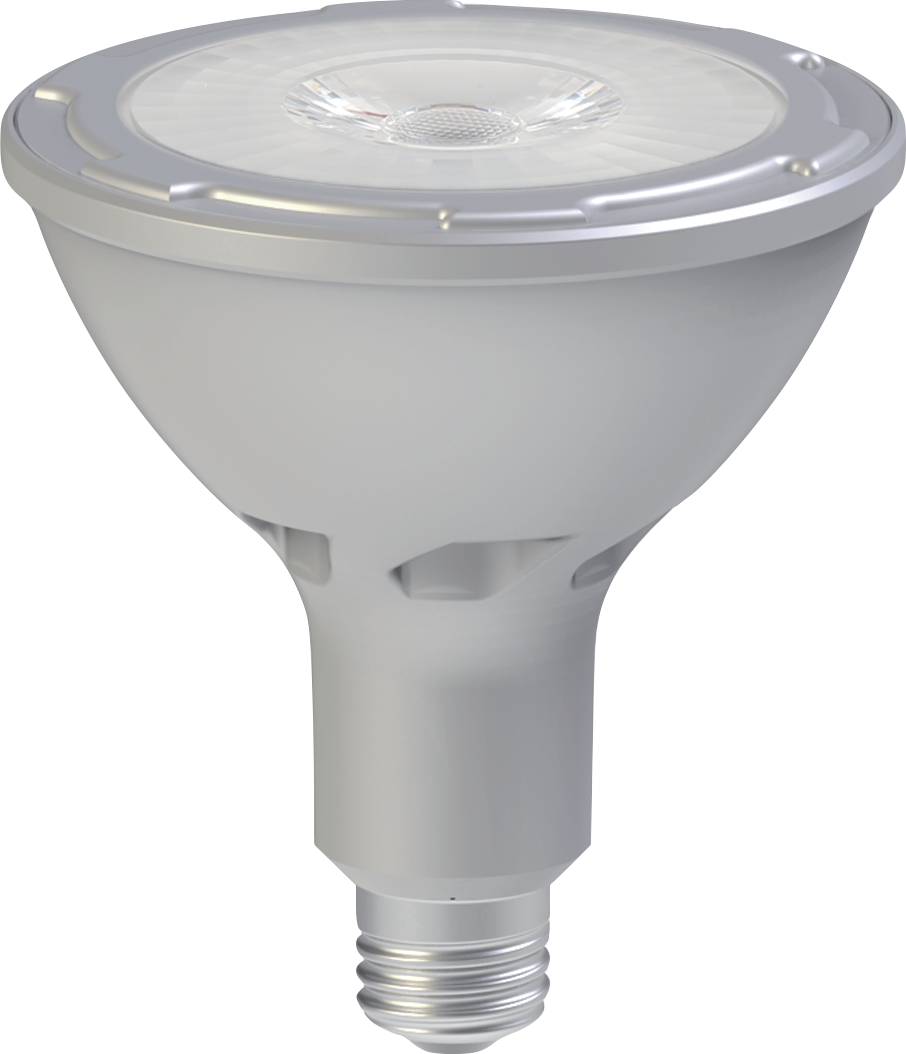
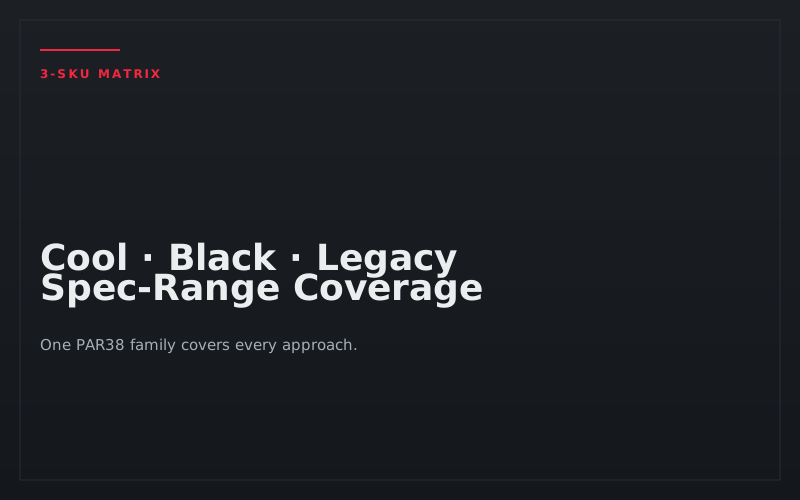
LPAR is the LED replacement for the small white floodlight on each approach to a pre-emption-equipped intersection — the EVP confirm beacon that illuminates steady-burn when an emergency vehicle has acquired traffic-signal pre-emption. Three SKUs cover the spec range: cool-white 4800K for the confirm-beacon visibility spec, MDOT-listed Black-Body 900lm for the strictest signal-lamp QPL in the US, and a 1500lm legacy flagship for general traffic-signal applications. CRI 93. 5-year warranty. Direct screw-in to existing E26 PAR38 sockets.
| Watt | Lumens | Efficacy | CCT | Voltage |
|---|
How EVP Pre-Emption Works
An emergency vehicle approaches a pre-emption-equipped intersection. Its emitter sends an infrared signal to a detector mounted on the signal head. The detector tells the controller to flip the lights to green for that approach. The controller fires the LPAR confirm beacon to steady-burn — visual proof to the emergency operator that pre-emption was acquired. Five stages. LPAR is stage 5.
Diagram derived from public-domain documentation of Opticom-style EVP systems and ALG datasheet language ("designed for direct installation into both existing and new EVP assemblies"). Static SVG — no video file or motion carousel claim. LPAR's specific role: stage 5 confirm beacon, the visual proof loop that closes the system.
Highlights & Features
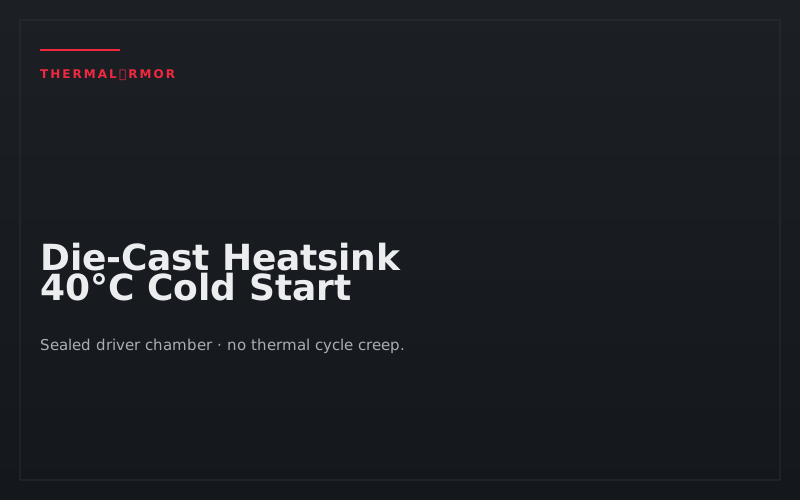
Three SKUs cover every EVP intersection approach — sealed-cabinet thermalⒶRMOR build, FCC Part 15 compliance, and CRI 93 for accurate visibility against amber signals.
Compatible Control Scenarios
LPAR runs on a 120Vac line input with Triac dimming compatibility for control scenarios where the traffic-signal controller dims the confirm beacon at night for visibility adaptation. Performance is specified at PF > 0.9 with non-flicker operation — meaning the lamp doesn't strobe at line frequency when dimmed, which matters because EVP detectors look for strobed light. A flickering confirm beacon false-triggering its own detector is worse than no confirm beacon.
Plus, the lamp is FCC Part 15 compliant. Traffic cabinets are full of RF: cellular modems, EVP infrared detectors, signal controllers, dimming Triacs, surge protectors — all packed into the same enclosure. A general-purpose PAR38 LED can radiate enough EMI to corrupt EVP detector signals or interfere with cellular backhaul. LPAR's driver is explicitly designed for cabinet-RF cleanliness.
Compatible with any standard Triac (forward-phase) dimmer that meets the host signal-controller's specification. No proprietary controls platform, no firmware handshake, no commissioning. Just a 120Vac line with a Triac dimmer in series — the lamp dims smoothly with no perceptible flicker, no audible buzz, and no RF interference with the rest of the cabinet electronics. PF maintained at >0.9 across the dim range. Operating temperature -4°F to 120°F (MDOT 900lm Black-Body extends to -40°F to 165°F). Suitable for use in totally enclosed signal-cabinet fixtures.
View Datasheet for full electrical spec →Engineering · Anatomy
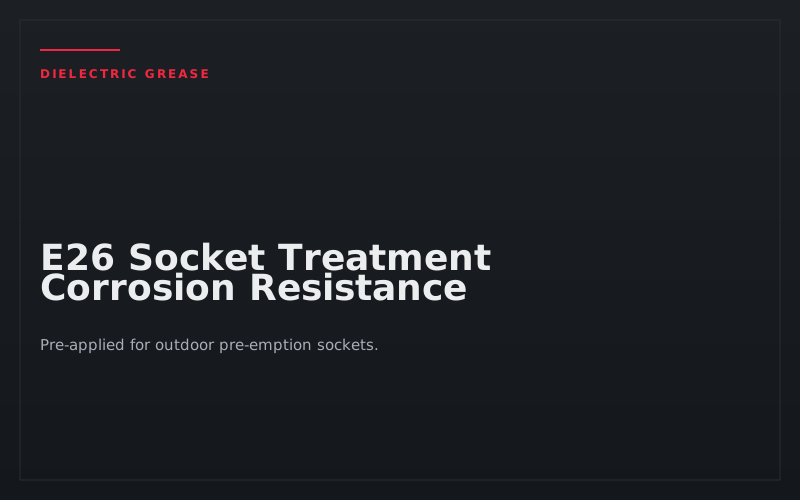
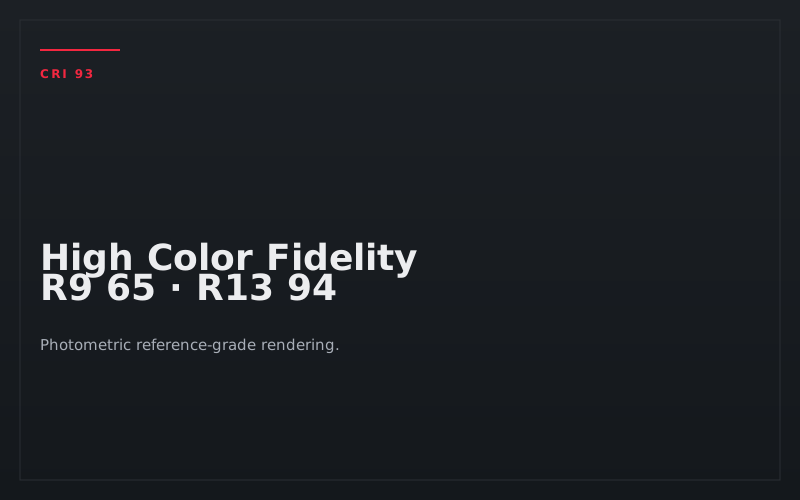
Seven engineering details that make LPAR the right PAR38 lamp for traffic-signal cabinets — a 25° narrow-flood Clear Optic for confirm-beacon visibility, CRI 93 with high R9 + R13 for accurate color rendering against amber signals, thermalⒶRMOR heat-sink geometry tuned for sealed enclosures, and dielectric grease at the E26 base to keep the contact interface alive across the full 25,000-hour rated lifespan.
Anatomy callouts derived from the datasheet's Main Features section. The 25° Clear Optic is what makes the LPAR a legitimate confirm-beacon spec match (commodity PAR38 LEDs typically ship 40°+). thermalⒶRMOR design is what keeps it alive past 25,000 hours inside a sealed south-facing signal cabinet that hits 165°F in summer. Dielectric grease is what keeps the E26 contact corrosion-free across that same 25,000-hour run.
LPAR is designed for direct installation into both existing and new EVP signal-head assemblies. E26 medium screw base means it screws into the same socket your incandescent or halogen confirm beacon used — no rewiring, no housing modification, no adapter plate. Compatible with the dominant US EVP systems and any signal head with an Opticom-style PAR38 confirm-beacon socket.
Every option below maps to the LPAR Traffic PAR38 order code. Selections build the SKU live — no checkout, no surprises. Required fields marked with *. Greyed-out options are not selectable with your current configuration. See the legend in the Optional column for ★ / QS / MTO meanings.
Spec engineers, traffic-signal contractors, and DOT procurement need the datasheet for the project schedule, the SKU on the bid line, and a submittal stamp for the AHJ review. Three documents cover the workflow.
LPAR is the cityⒶRCH traffic-signal product. The other three cityⒶRCH outdoor lines — Sentry bollards for the pedestrian approach, Abbey for area roadway, OmniMax for high-mast intersections — round out the bid sheet for any signalized-intersection project. Same factory, same warranty platform, one PO.
LPAR handles the EVP confirm beacon. These cross-line fixtures handle everything else — same warranty platform, same factory. Specify them together for a coherent ALG package across the whole intersection.
Five US warehouses ship in 3-5 days. Layout requests come back inside 48 hours. Quotes, sample requests, and rebate matches reply same business day. No portal-as-the-only-channel: you get a person.
Spec the LPAR for the EVP confirm beacon, the Sentry for the pedestrian approach, the Abbey for the roadway cobra-head, and the OmniMax for the major-intersection high mast — all on the same PO, all from the same factory. One inventory line for the cityⒶRCH outdoor portfolio reduces procurement complexity by an order of magnitude across a multi-intersection contract.